The electrical industry depends on the stable operation of assets across power generation, substations, transmission networks, distribution systems, and end-user facilities. In these environments, abnormal heat is often one of the earliest indicators of developing problems, whether caused by overload, loose connections, insulation deterioration, cooling inefficiency, or equipment stress.
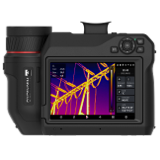
HIKMICRO Handheld thermal cameras help electrical professionals make these temperature changes visible earlier, supporting safer inspections and more proactive maintenance across the power chain.
Unlike conventional visual inspection, thermal imaging allows operators to assess energized equipment without physical contact. By revealing temperature distribution in real time, it helps teams identify hidden anomalies before they develop into failures, outages, or safety incidents. From utility infrastructure to commercial and industrial facilities, handheld thermal cameras have become a practical tool for improving inspection efficiency and equipment reliability.
In power generation, thermal imaging supports the inspection of critical assets that operate under continuous thermal and mechanical stress.In thermal power plants, it can be used to monitor boilers, steam turbines, and generators, helping maintenance teams identify abnormal heating that may indicate wear, damage, or declining operating efficiency.In nuclear power plants, thermal imaging is valuable for monitoring cooling-system temperature distribution, where abnormal thermal behavior may indicate developing faults or safety risks.
It also plays an important role in renewable energy applications. In wind power generation, HIKMICRO handheld thermal cameras can be used to monitor bearings and gearboxes, helping teams identify mechanical wear or lubrication issues at an earlier stage. In solar photovoltaic systems, thermal imaging helps reveal localized hot spots on PV panels, making it easier to detect equipment malfunctions, performance loss, or the effects of partial shading.
Substations are one of the most important electrical inspection environments because they are responsible for voltage transformation, current distribution, and energy transmission. They contain high-value assets such as transformers, switchgear, circuit breakers, knife switches, capacitors, and reactors, all of which require reliable thermal performance to support stable system operation.
HIKMICRO Handheld thermal cameras help inspectors monitor the temperature distribution of key equipment such as transformers and switchgear during routine inspections. Abnormal temperature patterns may indicate overload, loose connections, or other developing equipment issues. In this way, thermal imaging supports earlier fault identification, improves maintenance efficiency, and helps reduce the risk of unexpected failures within the substation environment.
Transmission networks carry electricity over long distances from generation sources to substations and major demand centers. Because these systems span large geographic areas and include high-voltage lines, conductors, insulators, joints, towers, and converter-related equipment, inspection speed and accuracy are critical.
HIKMICRO Handheld thermal cameras help operators monitor temperature distribution along transmission assets and identify hot spots linked to overload, cable damage, poor connections, insulation issues, or localized faults. In HVAC transmission systems, thermal imaging can be used to inspect conductors, insulators, and other high-voltage equipment. In HVDC systems, it can help monitor converter stations and critical equipment to support system stability during long-distance power transmission.
HIKMICRO is also useful for identifying efficiency-related issues in transmission lines, where heat may build up at cables and contact-resistance points. In addition, it can support structural monitoring of transmission towers by helping inspectors recognize abnormal thermal patterns associated with vibration or structural irregularities. These capabilities make handheld thermal cameras particularly valuable in transmission environments where early detection is essential for avoiding wider network disruption.
In distribution systems, thermal imaging improves visibility into the equipment that steps voltage down and delivers electricity closer to where it is used. Typical inspection targets include distribution transformers, circuit breakers, load switches, power meters, and related control equipment. Because these assets operate throughout daily network activity, early identification of thermal anomalies is important for maintaining service reliability.
Handheld thermal cameras can be used to monitor transformer cooling systems and windings, inspect breaker connection points and contacts, and detect abnormal heating in power meters and other distribution equipment. They are also relevant in distributed energy systems and microgrids, where solar PV assets, wind power equipment, and smart control systems must be monitored to support reliable and flexible local power supply.
HIKMICRO Thermal imaging can further contribute to power quality management by helping detect overheating associated with harmonics and other electrical abnormalities. When combined with broader monitoring methods, it supports faster root-cause identification and better operational response in modern distribution environments.
The value of handheld thermal cameras extends beyond the grid into residential, commercial, and industrial power consumption environments. At this stage, the main concerns often include electrical malfunctions, overloads, short circuits, aging equipment, and energy-efficiency issues. Detecting temperature anomalies early is important not only for equipment reliability, but also for electrical safety and preventive maintenance.
In residential settings, thermal imaging can be used to monitor the operating temperature of household appliances and electrical devices, helping identify potential faults and improve electrical safety. In commercial facilities such as office buildings, shopping centers, and restaurants, it can help inspect electrical equipment, cables, lighting systems, and other building services. In industrial environments, handheld thermal cameras support the monitoring of large machinery, production lines, and other electrically powered assets, helping teams prevent failures and maintain operational continuity.
Across the electrical industry, temperature is one of the most direct and actionable indicators of equipment condition. A handheld thermal camera gives inspection teams a faster and safer way to detect abnormal heat, assess asset condition in operation, and respond before minor issues escalate into larger failures.
As electrical systems become more interconnected, more distributed, and more demanding in terms of uptime and safety, handheld thermal imaging continues to grow in value. From generation and substations to transmission, distribution, and end-user facilities, it supports a more efficient and condition-based approach to inspection across the entire electrical industry.
Hikmicrotech.com would like to use analytics cookies and other similar tracking technologies ("Cookies") to help us improve our website. The Cookies collect information in a way that does not directly identify anyone. For more information about the Cookies we use, see our cookies policy here.